

When Jamie-Lee and Samantha were children, neither they nor their family had ever heard of Friedrich's Ataxia (FA). Yet by the ages of 11 and 9, both sisters had been diagnosed with the rare neurological condition that would change the course of their lives.
For Jamie-Lee, the journey began with a "wonky walk". For Samantha, it was a shaky hand. As the symptoms worsened, everyday tasks became increasingly difficult.
Jamie-Lee remembers struggling to walk in a straight line, tripping over seemingly nothing, and watching other children do things that her body simply would not allow. After years of appointments with different health professionals, a neurologist finally provided the answer the family had been searching for. The diagnosis was devastating. At the time, their father was told to brace himself for a nine-year degenerative journey. "It was so brutal," Jamie-Lee says, "but with advancements in treatment, I'm still here."
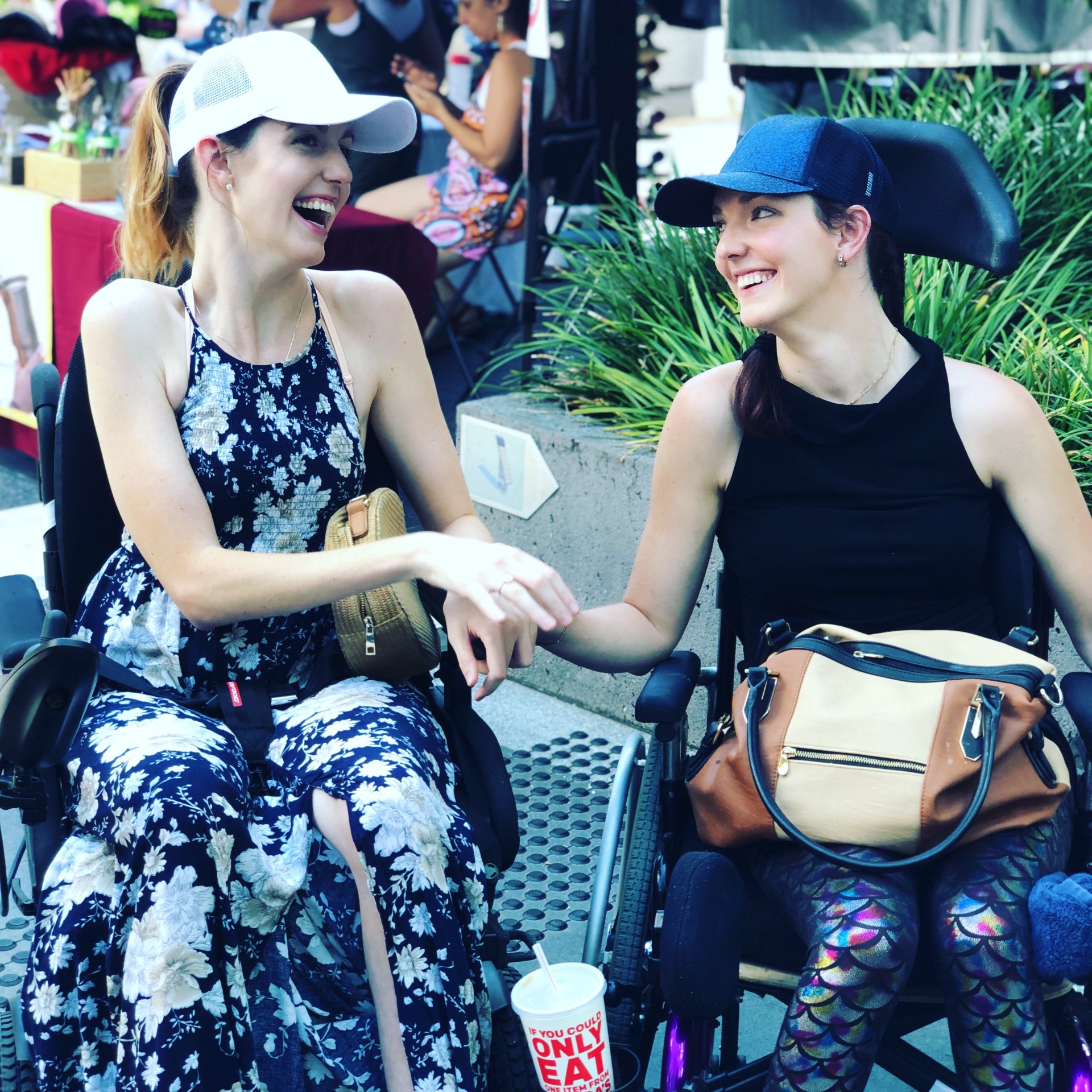
Samantha and Jamie-Lee
As FA progressed, both sisters had to rethink the futures they had imagined for themselves. Jamie-Lee dreamed of becoming an actress before studying journalism and building a career as a copywriting assistant. Today, despite the challenges FA presents, she continues to tell stories, having written a children's book to empower young people diagnosed with neurological conditions and begun work on a fiction novel centred on disability. Samantha's dream of becoming a kindergarten teacher also evolved when the physical demands of the role became impractical. Instead, she studied business and now models for an inclusive clothing company, continuing to challenge assumptions about what life with a neurological condition looks like.
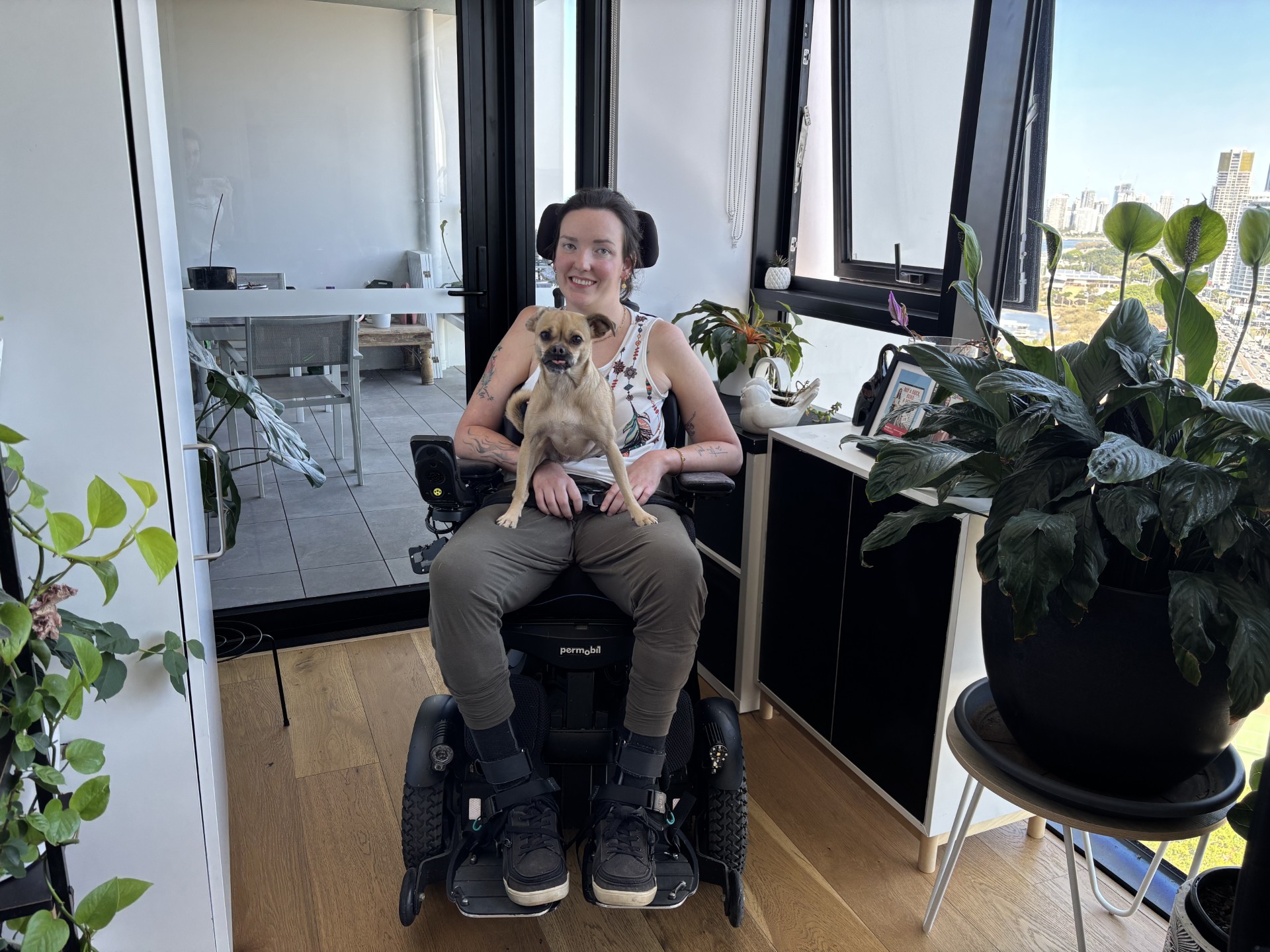
Jamie-Lee with Berlin
Rather than allowing FA to define them, the sisters have made it their mission to challenge stereotypes and show others what resilience can look like. Together they perform as the "Two Sit Down Comedians", using humour to navigate life's challenges and connect with audiences through their shared experiences.
"Even though physically, Friedrich's Ataxia will win. Mentally, it will never win," says Jamie-Lee.
"I've learnt from the battles I've faced to try and see humour in the life I lead. Together, with my sister, we perform a stand-up comedy duo and laugh at silly things we experience."
Today, Jamie-Lee and Samantha are encouraging Queenslanders to support people living with neurological conditions through the MS Moonlight Walk. While they continue to face the realities of FA, they remain deeply hopeful for the future. "There's always hope that someone will find a way to cure some of us who live with Friedrich's Ataxia," Jamie-Lee says. "I have found my life so far to be worthwhile, and I live with hope that one day, another little girl won't have to face what Sammy and I have faced because a cure has been found."
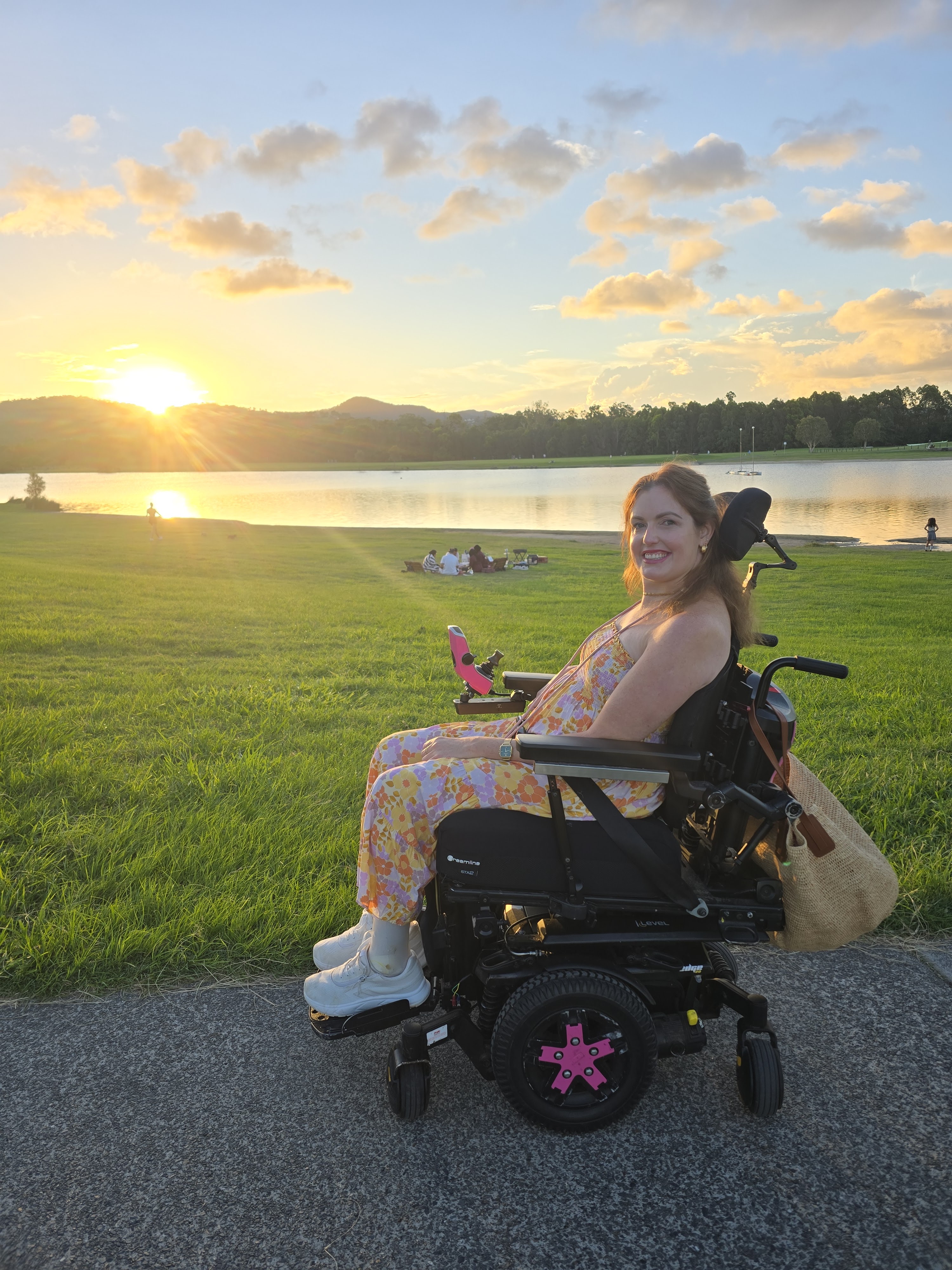
Samantha


